
Ball Control vs Dribbling: Match-Day Precision
Ball control is the ability to receive, protect, carry, and release the ball accurately under pressure; dribbling is only one part of it. A player can complete 200 cone touches and still lose possessi...
Ball Control vs Dribbling: Match-Day Precision
Ball control is the ability to receive, protect, carry, and release the ball accurately under pressure; dribbling is only one part of it. A player can complete 200 cone touches and still lose possession after one ugly first touch in a real match. The fastest improvement comes from combining 7 practical drills: toe taps, inside-outside touches, wall passes, juggling, directional receiving, tight-space dribbling, and pressure-based scanning. Train both feet, keep most touches within 30–60 centimetres, and practise receiving passes at different speeds and angles. FIFA’s Laws of the Game define the ball as the central object of play, but your next action determines whether possession becomes useful. Football Compass recommends three focused sessions weekly, each lasting 20–30 minutes, rather than one heroic two-hour session followed by four days of doing absolutely nothing. Start with 100 controlled touches, measure successful first touches out of 20, and increase difficulty only when accuracy reaches at least 80%.

Photo by Franco Monsalvo on Pexels
Is better ball control really built through repetition?
Yes, but deliberate repetition improves ball control far more effectively than mindless touching. The useful target is not simply a high touch count; it is clean contact, correct body shape, awareness before receiving, and an immediate second action. A 2023 review in the Journal of Sports Sciences linked skilled performance with perception-action coupling, meaning players must train decisions and movements together.
Many beginners practise stationary touches because they feel comfortable. That is precisely why the drill often fails on Saturday. A match gives you imperfect passes, closing defenders, changing surfaces, limited time, and teammates demanding the ball while you are still looking over your shoulder. Your training should therefore progress through four stages:
- Technical control: touch the ball with the inside, outside, sole, laces, and weaker foot.
- Directional control: move the first touch away from an imaginary defender.
- Perceptual control: scan left and right before the ball arrives.
- Competitive control: perform the same action while sprinting, turning, or under pressure.
The International Football Association Board’s Laws of the Game state that “the ball is spherical,” which sounds obvious until a cheap training ball, wet grass, or a deflection turns your perfect plan into comedy. Use different balls and surfaces occasionally. Football Compass readers following FIFA World Cup 2026 tactics will notice the same principle at elite level: top midfielders rarely kill the ball dead; they control it into the next action.
Want a clearer training structure before you start? Use the guide below as your weekly baseline.
How does ball control handle fast passes and pressure?
Effective ball control absorbs the pass, changes its direction, and protects the next decision within one or two touches. Against a fast ball, soften the receiving surface instead of stabbing at it; against pressure, receive side-on and take the first touch into available space. The goal is not to stop the ball beautifully but to make the next action easier.
Start with a partner or wall and mark a 1.5-metre receiving zone using two cones. Pass with the right foot for 60 seconds, then the left foot for 60 seconds, alternating between firm and gentle passes. Your first touch should enter the zone but not sit directly under your body. After five rounds, add a passive defender who points left or right as the ball travels. You must scan, receive, and move away from the indicated side.
A useful technical checklist looks like this:
- Open your hips before the pass arrives.
- Look over both shoulders during the passer’s approach.
- Keep your standing foot beside the ball, not behind it.
- Cushion the ball with a relaxed ankle.
- Push the second touch into space rather than straight ahead.
- Accelerate immediately after controlling the ball.
One overlooked detail is pass speed. In a simple test, use a 10-metre distance and record 20 receptions at walking pace, 20 at jogging pace, and 20 at match pace. If your success rate drops from 90% to 55% when the ball travels faster, your technique is not match-ready yet, regardless of how smooth the slow drill looks. This is where [Internal Link: first-touch training drills] belongs in your routine.
After you can control the pass, add a decision. Otherwise you are just becoming excellent at receiving imaginary mail.
The seven drills that improve control fastest
These drills cover the major surfaces, directions, and pressures involved in football. Complete them in order during a 25-minute session, resting for 30 seconds between rounds.
- Toe taps: Alternate the soles over the ball for 3 sets of 30 seconds. Keep your knees soft and your upper body relaxed.
- Inside-outside touches: Move laterally using the inside and outside of one foot, then switch feet after 45 seconds.
- Cone gates: Place five gates two metres apart and carry the ball through them with no more than two touches per gate.
- Wall passes: Complete 50 right-foot passes and 50 left-foot passes, controlling across your body.
- Juggling progression: Begin with two feet, then one-foot-only rounds, thigh contacts, and alternating thigh-foot patterns.
- Directional first touch: Receive from a wall and take the ball around a cone placed 1.5 metres to your left or right.
- Tight-space escape: Work inside a 5-by-5-metre square and exit through a called gate after a turn.
The exact numbers matter because vague practice produces vague improvement. Record clean repetitions, not heroic attempts you immediately forget.
What about weak-foot control and tight spaces?
Weak-foot control improves when the weaker side receives frequent, low-pressure repetitions and then faces realistic directional problems. Spend 40–50% of technical work on your weaker foot, but do not isolate it forever; alternate feet so the brain learns to choose the best option rather than waiting for the favourite side. In tight spaces, body position and scanning usually matter more than flashy tricks.
For a practical 12-minute block, create a 4-by-4-metre square with four numbered exits. Dribble inside using only the left foot for 45 seconds, rest for 15 seconds, then repeat with the right foot. A partner calls an exit number while you are moving. You must perform a turn, accelerate for two metres, and stop the ball inside the correct channel. This adds a decision to every repetition and exposes a common weakness: players who can manipulate the ball but cannot identify space quickly.
Use these turns first:
- Inside cut for a change of direction.
- Outside cut when the defender overcommits.
- Sole roll to shield and reset.
- Cruyff turn when a forward pass is blocked.
- Drag-back turn when the defender is tight behind you.
A useful information-gain test is the three-second rule. Start a timer when the ball arrives and count whether you complete a controlled action before three seconds pass. In 30 repetitions, aim for at least 24 successful outcomes while keeping the ball within two metres. This measures usable control better than juggling records. Juggling is valuable for touch sensitivity, but it does not automatically teach you to receive a bouncing pass with a defender attached to your shoulder. That misunderstanding has ruined many backyard legends.
Ready to train both feet without turning the session into random chaos?
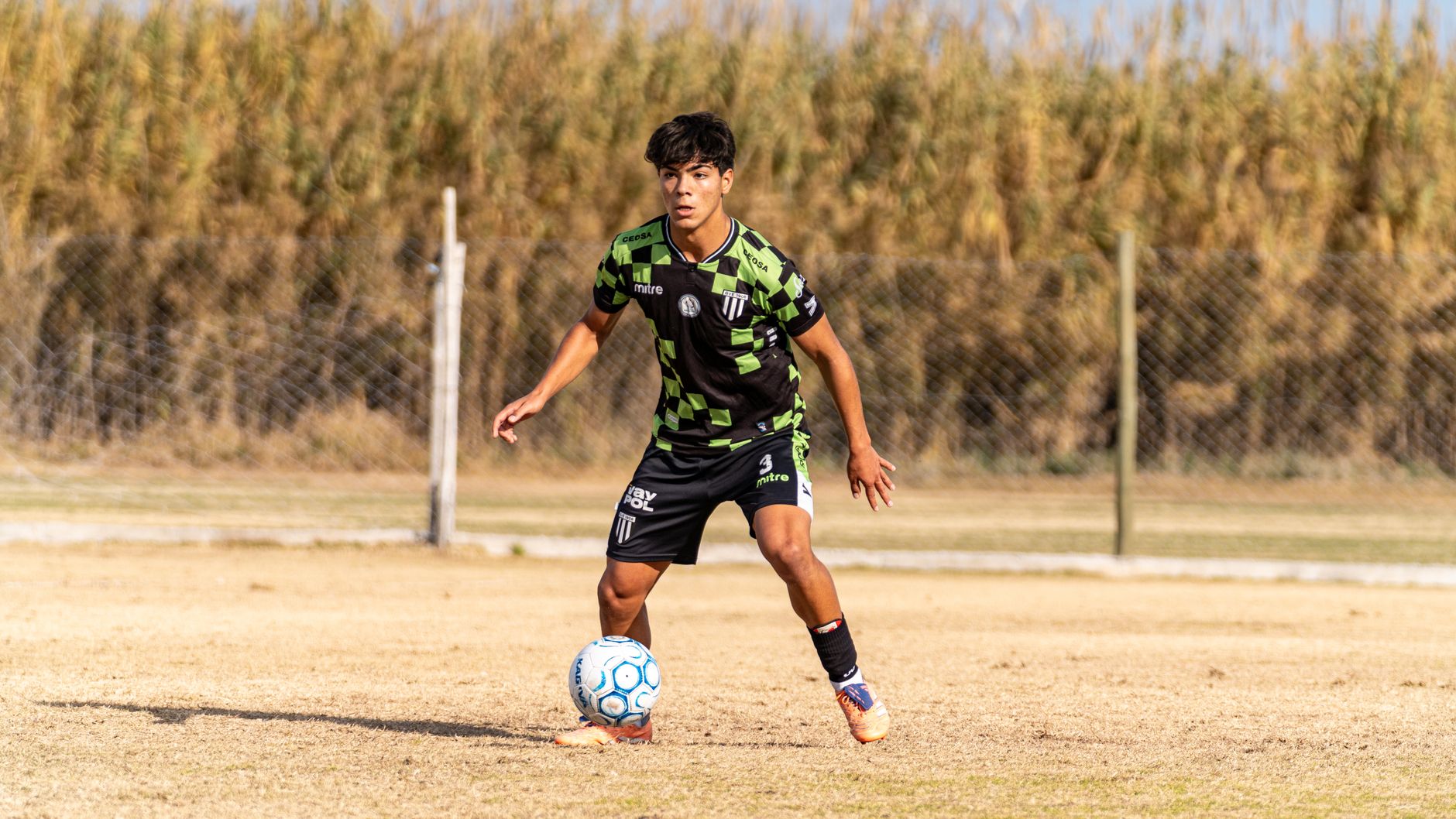
Photo by Franco Monsalvo on Pexels
Where does ball-control training fail?
Ball-control training fails when players practise the wrong speed, ignore scanning, use only the dominant foot, or measure tricks instead of possession outcomes. It also fails when the drill environment is too predictable: the same ball, same surface, same direction, and no defender. Predictability creates confidence, but it does not create adaptability.
The most common problems are easy to diagnose:
- The ball bounces away: Your ankle is too rigid or your receiving surface is angled incorrectly.
- The first touch goes backward: Your body is closed, or you receive square to the passer.
- You lose possession under pressure: You scan too late and control toward the defender.
- You can use both feet in drills but not matches: The training lacks fatigue, speed, and decisions.
- You over-dribble: You have learned ball movement without learning game awareness.
- You panic after a poor touch: You stop moving instead of recovering with your body between opponent and ball.
Try a simple error audit over three sessions. Record 20 receptions each day and classify every mistake as technical, perceptual, physical, or tactical. If 12 of 20 errors happen because you never scanned, more cone work will not fix the problem. Add shoulder checks before the pass and use a partner to provide visual cues. If the errors happen late in sessions, reduce each drill from 60 seconds to 30 seconds and increase recovery quality.
Research from UEFA Training Ground repeatedly emphasises game-realistic practice, and the principle is brutally practical: train the problem you actually have. Your highlight-reel weakness is still a weakness, even if the clip looked excellent.
How long does it take to improve ball control?
Most players notice cleaner touches after two to four weeks of consistent practice, while reliable match-speed control usually requires eight to twelve weeks. Progress depends on training frequency, starting level, foot balance, pressure, and whether sessions include decisions rather than isolated movements. Three 20–30-minute sessions each week is a realistic minimum for visible improvement.
A strong 8-week plan should increase difficulty gradually:
- Weeks 1–2: Stationary touches, wall passes, juggling, and basic receiving.
- Weeks 3–4: Directional first touches, weaker-foot repetitions, and cone gates.
- Weeks 5–6: Passive defenders, faster passes, and smaller spaces.
- Weeks 7–8: Live pressure, one-touch limits, fatigue, and transition decisions.
Measure three numbers every Sunday: successful first touches out of 20, weak-foot completion percentage, and possessions retained in a 3-by-3-metre game. An improvement from 11 to 16 successful receptions is meaningful. Adding 500 random toe taps while your match retention remains unchanged is mostly decorative suffering.
Football Compass can help connect individual technique with team tactics, especially when studying how midfielders in FIFA World Cup 2026 squads receive between lines. Watch where players place the ball before their second action. That detail is more valuable than copying a spectacular step-over from a compilation video.
Should you try ball-control training today?
Yes, but begin with a measurable 25-minute session rather than an exhausting collection of random drills. Use a wall, four cones, one ball, and a phone timer; complete 100 controlled touches, 50 passes per foot, 20 directional receptions, and 10 pressure-style exits. Finish by recording your success rate and one recurring error.
Here is a compact session you can repeat three times weekly:
- Five minutes: toe taps, inside-outside touches, and sole rolls.
- Eight minutes: wall passes, alternating feet and receiving directions.
- Seven minutes: cone gates and weak-foot directional control.
- Three minutes: tight-space dribbling with a called exit.
- Two minutes: test 20 fast receptions and write down errors.
Do not increase speed, space restrictions, or defender pressure all at once. Change one variable per session so you know what caused improvement or collapse. A useful target is 80% clean execution before progressing; below that level, return to the previous difficulty and repair the movement. Also practise on grass, artificial turf, and a slightly damp surface when possible, because match football is not played on a laboratory floor designed exclusively for your comfort.

Photo by Franco Monsalvo on Pexels
The final recommendation is simple: train your first touch to create time, not applause. A controlled ball that moves 40 centimetres into safe space is often more valuable than a stylish trick that moves nowhere. Use the [Internal Link: weekly football skills plan] to track repetitions, successful decisions, and match transfer. If you follow the numbers for eight weeks, your control should become calmer, quicker, and far less dependent on perfect passes. And if it does not, inspect the training honestly before blaming the ball, the pitch, your boots, the moon, or the referee’s grandmother.
Want to connect technical improvement with tournament analysis and player performance?
Frequently Asked Questions
Q: What is ball control in football?
A: Ball control is the ability to receive, move, protect, and release the ball accurately while preparing for the next action. It includes first touch, dribbling, shielding, juggling, turning, and control with different surfaces of both feet. Strong control also requires scanning before the ball arrives and choosing a useful direction afterward. A player who stops the ball perfectly but cannot escape pressure does not yet have complete match-ready control.
Q: How can I improve ball control at home?
A: Practise wall passes, toe taps, juggling, directional touches, and cone gates for 20–30 minutes three times weekly. Use a wall or rebounder, mark a 4-by-4-metre area, and complete at least 50 passes with each foot. Add a decision by calling a direction before the ball returns or using numbered exit gates. Record successful first touches out of 20 so your improvement is based on evidence rather than vibes.
Q: What is the difference between ball control and dribbling?
A: Ball control covers every way you manage possession, while dribbling specifically involves carrying the ball while moving. Receiving a pass, cushioning a high ball, shielding, turning, and setting up a shot are control skills even when you do not beat a defender. Dribbling is one branch of control, not the entire tree. Prioritise first touch and awareness before collecting fancy moves like they are rare trading cards.
Q: Why does my first touch keep going too far?
A: A poor first touch usually comes from a rigid ankle, closed body position, late scanning, or receiving at the wrong angle. Relax the receiving foot, open your hips, and cushion the ball instead of stabbing at it. Begin with slower passes and a 1.5-metre target zone, then increase speed only after reaching 80% accuracy. If the problem appears only under pressure, add a passive defender rather than repeating isolated touches.
Q: How much practice is needed to improve ball control?
A: Three focused sessions of 20–30 minutes per week can produce noticeable improvement within two to four weeks. Reliable match-speed control generally takes eight to twelve weeks because pressure, fatigue, scanning, and decision-making must be trained together. Divide time between both feet, reserve 40–50% of technical work for the weaker side, and test 20 fast receptions weekly. Consistency beats one punishing session followed by a week of mysterious disappearance.
Q: Is juggling enough to improve soccer ball control?
A: Juggling improves touch sensitivity and coordination, but it is not enough for complete football control. It does not automatically teach you to receive a fast pass, protect possession, scan for defenders, or direct the ball into space. Use juggling for five minutes as part of a larger routine that includes wall passes, directional first touches, tight-space movement, and pressure-based decisions. The ball does not award bonus points for looking impressed in your driveway.
Q: Should beginners practise with cones or a defender first?
A: Beginners should start with cones and a wall, then add a passive defender once they can complete roughly 80% of the basic actions. Cones provide repeatable technique, while defenders add perception, timing, and pressure. Progress from stationary touches to moving receptions, then to live challenges inside smaller spaces. Starting with an aggressive defender can create panic and poor habits; waiting forever to add pressure creates the opposite problem. Both extremes are traps.
END_OF_DISPATCH
Thanks for reading this article from our archive.