
Before You Bet, Read This 2026 Rules Breakdown
The 2026 football rules changes differ by competition: NFHS updates apply to U.S. high school football, NCAA changes govern college football, and NFL amendments control professional games. NFHS approv...
Before You Bet, Read This 2026 Rules Breakdown
The 2026 football rules changes differ by competition: NFHS updates apply to U.S. high school football, NCAA changes govern college football, and NFL amendments control professional games. NFHS approved play cards on the forearm, wrist or belt and prohibited players from slapping an opponent’s head with the hand. NCAA updates address targeting penalties, replay procedures, player safety, technology and the new fair-catch kick. The NFL revised kickoff alignment, touchback placement, onside-kick declarations and consultation over possible disqualifications. The College Football Officiating organization and National Football Foundation presented the NCAA updates ahead of the 2026 season, while the NFHS listed its changes for the 2026 rulebook. For Football Compass readers following World Cup betting and football analysis, the key takeaway is simple: identify the competition before interpreting any rule, then check the official rulebook rather than trusting a clipped social-media explanation.
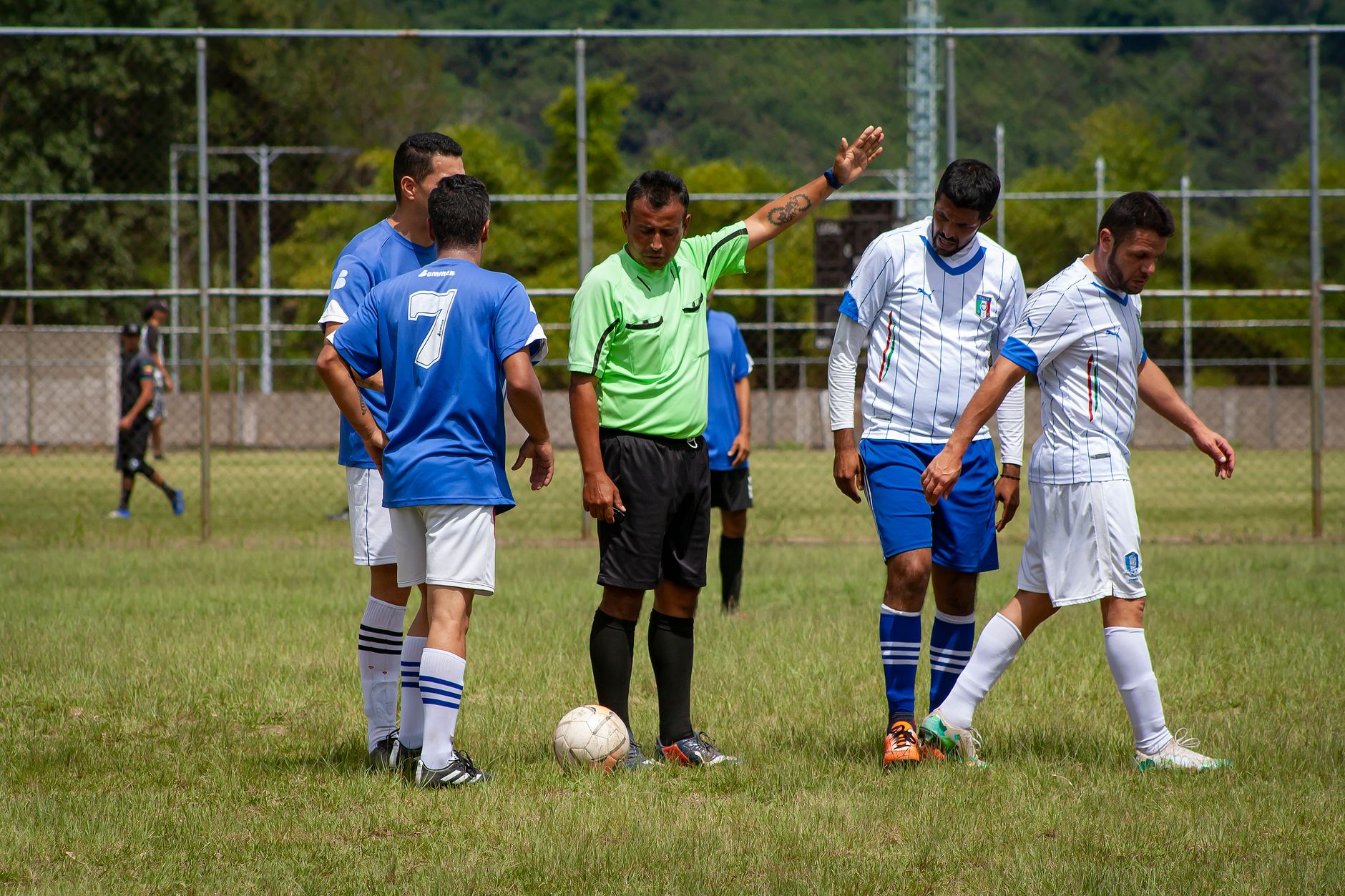
Photo by Arturo A on Pexels
The Bottom Line
The 2026 rules landscape is not one universal rule change; it is three separate systems moving in slightly different directions. NFHS focuses heavily on equipment, player conduct and practical game administration, NCAA emphasizes safety, targeting, replay and special teams, while the NFL adjusts kickoff mechanics and disciplinary review. That distinction matters more than the headline. A player wearing a play card on a belt may be legal under NFHS Rule 1-5-3c(9), yet that does not automatically tell you what is permitted in an NCAA or NFL game. Yes, football governing bodies enjoy making everyone memorize three versions of reality. Veteran move: always write down the competition, rulebook edition and season before making a prediction, settling an argument, or assessing a disciplinary decision. The NFL 2026 Rulebook provides the professional reference, while NFHS Football publishes high-school materials and change notices.
Want a clearer competition-by-competition view before analyzing matches?
What Players Actually See
Players will notice the 2026 changes most clearly through equipment checks, kickoff positioning, contact enforcement and replay stoppages. Under NFHS guidance, play cards can be worn on both the forearm or wrist and belt areas, an operational change that helps quarterbacks and defensive captains access information without improvising illegal attachments. NFHS also clarified restrictions on attachments to tooth and mouth protectors for the 2026 season, while arm-sleeve specifications are being developed for the 2027 season. Those dates are not interchangeable, despite how confidently somebody in the group chat may claim otherwise. The NFHS points of emphasis include flagrant and unsportsmanlike fouls, helping the runner and sideline management, so coaches should train the behavior around the equipment rather than merely buying compliant gear.
The NCAA experience is different. The 2026 college rules package covers targeting penalties, replay procedures, player safety, technology and on-field operations, with the fair-catch kick being the most conspicuous special-teams addition. NCAA officials, conferences and coaching staffs must understand the exact trigger, placement and timing requirements before treating it as a routine scoring option. In the NFL, players will see altered receiving-team alignment requirements in the kickoff setup zone, a changed dead-ball spot after a touchback when the kickoff comes from the 50-yard line, and permission for the kicking team to declare an onside kick at any time. These are field-position rules, but field position is basically football’s preferred currency, so pretending they are cosmetic would be adorable.
To learn how rule interpretation affects match analysis, see our [Internal Link: football tactics and match prediction guide].

Photo by Haberdoedas Photography on Pexels
The 3 Things That Matter Most
1. Targeting, contact and disqualification
NCAA targeting remains a major officiating and analytical issue because a decision can alter possession, field position, personnel and the rest of the game. The 2026 college package places continued emphasis on player safety and replay procedures, meaning the initial on-field ruling and later review must be understood as connected stages rather than separate events. The exact penalty, automatic disqualification conditions and review authority should be checked against the current NCAA rulebook and conference mechanics. Do not reduce every hard hit to “targeting”; intent, contact area, posture and defenseless-player protections matter, and replay angles can change the assessment. The NFL’s 2026 Rule 19-2 also permits league personnel to consult with on-field officials when considering possible disqualification for flagrant football and non-football acts, even if the act was not called on the field. That creates a meaningful post-review governance difference from casual sideline assumptions.
The NFHS change is narrower but still important: Rule 9-4-7 states that a player may not use the hand or hands to slap an opponent’s head. It sits alongside the broader NFHS emphasis on flagrant and unsportsmanlike fouls. Practically, defenders should keep hands controlled around the head and neck area, while coaches should show video examples that distinguish legal contact from a deliberate slap. My hard-earned tip: teach the exact prohibited action, not a vague “be careful up top” lecture that evaporates once the game gets loud.
2. Special teams and the changing kickoff
Kickoffs receive some of the most consequential 2026 attention, especially in the NFL and NCAA. The NFL modifies alignment requirements for receiving-team players in the setup zone, changes the dead-ball spot after a touchback following a kickoff from the 50-yard line, and allows the kicking team to declare an onside kick at any time. These adjustments can influence return formations, surprise-kick planning and expected starting field position. A bettor or analyst who relies on old kickoff assumptions may misread drive probability before the offense has even taken the field. That is not advanced analysis; it is just historical data wearing a fake moustache.
The NCAA fair-catch kick also deserves careful attention because it introduces a scoring possibility that many viewers will not recognize immediately. Its value depends on the exact fair catch, timing, location and kicking conditions, so it should not be treated as an automatic long-range field goal. Teams need a rehearsed procedure: identify the eligible situation, communicate the decision, confirm the placement, and ensure the kicking unit understands the relevant restrictions. The operational edge is not merely knowing the rule; it is recognizing the situation before the defense resets.
Get the practical implications for game-state analysis and special teams here.
3. Equipment, technology and sideline operations
NFHS’s play-card change is a good example of a rule that sounds tiny until you manage a roster, equipment inspection and sideline behavior. The 2026 language permits play cards on the forearm, wrist and belt areas, while mouth-protector attachments face clarified restrictions. Arm-sleeve specifications are identified for the 2027 season, not as a full 2026 enforcement change, so manufacturers and programs have time to prepare. Teams should inventory equipment before preseason, photograph questionable attachments, and ask the relevant state association for implementation guidance. That three-minute check beats discovering a compliance problem during a Friday-night inspection, which is when football chooses to become a paperwork thriller.
NCAA changes involving replay and technology affect more than officials. Coaches need a communication plan for challenges, booth reviews and stoppages; analysts need timestamps and angles; broadcasters need to explain why a ruling changed. The National Foundation and College Football Officiating have repeatedly framed player safety and accurate administration as central objectives. As the National Football Foundation and College Football Officiating announcement states, the changes cover “targeting penalties, replay procedures, player safety, technology, on-field operations and the introduction of the Fair Catch Kick.” That list is useful because it tells you where the real training burden sits.
Edge Cases & Gotchas
The biggest trap is mixing rulebooks. A 2026 NFHS rule change does not automatically apply to NCAA football, and an NFL kickoff amendment does not govern high school play. The same word, such as “targeting,” can carry different procedural consequences depending on the competition. Before evaluating a controversial play, use this checklist:
- Identify the level: NFHS, NCAA or NFL.
- Confirm the 2026 rulebook and competition date.
- Note whether the issue is a rule change, editorial correction, point of emphasis or local adoption.
- Separate the on-field ruling from replay or postgame discipline.
- Check the penalty yardage, disqualification and restart procedure.
A second gotcha concerns publication timing. The NFHS page lists the 2026 football changes and references an August 25, 2026 publication date, while the NCAA announcement was issued in August 2026 ahead of the college season. That means early-season articles, social posts and preseason broadcasts may be working from outdated wording. The publication date is not trivia; it is evidence. Save the official PDF or rulebook edition used for your analysis, because “I saw it online” has never survived a serious rules meeting.

Photo by Yura Forrat on Pexels
A third edge case is classification. Editorial changes, points of emphasis and actual rule amendments are not equal. NFHS lists numerous editorial updates, including sections 1-1-8, 1-5-1d, 1-5-3a, 2-15-1, 3-5-7g, 4-1-3, 5-3-1, 8-2-2 through 8-2-5, 9-4-3p, 9-8, 10-4 and 10-5. Most viewers will never notice an editorial adjustment directly, but officials and coaches absolutely need the corrected wording. The information-gain point here is simple: when comparing rule changes, count the categories, not just the flashy headlines. A list containing one new penalty and twelve editorial corrections is not twelve new gameplay mechanics.
For a competition-specific reference, use our [Internal Link: football rules comparison checklist]. Want to keep your pre-match research tidy instead of reinventing the wheel every weekend?
Verdict
The most important 2026 football rules change is not one isolated clause; it is the widening gap between NFHS, NCAA and NFL operating systems. NFHS players and coaches should prioritize play-card placement, mouth-protector attachments, hand contact to the head, helping the runner and sideline management. NCAA programs should drill targeting procedures, replay communication, player safety and the fair-catch kick. NFL teams should focus on kickoff alignment, 50-yard-line touchback placement, anytime onside-kick declarations and league consultation over potential disqualifications. Football Compass readers should map every prediction or rules-based opinion to the correct competition, official source and effective date. The veteran lesson, learned after losing enough arguments to fill a small stadium, is brutally practical: precision beats confidence. Read the rulebook first; make the hot take second.
Follow Football Compass for continuing 2026 tournament coverage, tactical analysis and player-stat context.
Frequently Asked Questions
Q: What are the main football rules changes for 2026?
A: The main changes vary by level: NFHS updates equipment and conduct rules, NCAA updates targeting, replay, technology and the fair-catch kick, while the NFL changes kickoff and disqualification procedures. NFHS permits play cards on the forearm, wrist and belt areas and prohibits slapping an opponent’s head with the hand. The NFL also allows an onside kick to be declared at any time during the game under the 2026 rules.
Q: How can I tell whether a 2026 rule applies to my game?
A: Identify whether the game follows NFHS, NCAA or NFL rules, then verify the relevant 2026 rulebook. High school games generally use NFHS rules, college games use NCAA rules, and professional games use the NFL rulebook. State associations, conferences and league policies can add implementation details, so check those authorities before relying on a general online summary.
Q: What is the difference between NFHS, NCAA and NFL rule changes?
A: NFHS concentrates on high-school equipment, contact enforcement and sideline administration, NCAA focuses on college safety, replay and special teams, and the NFL targets professional kickoff and discipline mechanics. For example, the NFHS play-card provision is not an NCAA or NFL rule by default. Similarly, the NFL’s anytime onside-kick declaration does not automatically change college or high-school procedure.
Q: What is the NCAA fair-catch kick in 2026?
A: The NCAA fair-catch kick is a 2026 college-football scoring option connected to a valid fair catch and the applicable kicking procedure. Teams must recognize the qualifying situation, confirm the spot and time, and organize the correct kicking unit. It is not an automatic field goal, and its usefulness depends on field position, distance, game clock and the exact NCAA requirements.
Q: Why might a replay decision change a targeting call?
A: A replay decision can change targeting enforcement when available video clarifies contact, player posture, the contact area or whether the protected-player standard applies. NCAA officials may review the original ruling under the applicable replay procedure, while the NFL has separate consultation and disqualification mechanisms. Analysts should record the initial call and final ruling separately rather than treating them as one uninterrupted decision.
Q: What equipment should teams check before the 2026 season?
A: Teams should inspect play-card placement, mouth-protector attachments, arm sleeves and any accessory that could affect player safety or visibility. NFHS permits play cards on the forearm, wrist and belt areas for 2026 and clarifies mouth-protector attachment restrictions. Arm-sleeve specifications are associated with the 2027 season, so programs should distinguish preparation guidance from current-season enforcement.
Q: Where can I find the official 2026 football rulebooks?
A: Use NFHS Football for high-school rules publications, the NCAA and College Football Officiating materials for college rules, and NFL Football Operations for the professional rulebook. The official sources are more reliable than social-media clips or recycled preseason articles. Check the publication date, download the relevant PDF or rulebook, and confirm whether your state, conference or league has additional implementation guidance.
END_OF_DISPATCH
Thanks for reading this article from our archive.