
Football Fitness Training Tips: What 3 Seasons Taught Me
Football fitness training works best when it combines aerobic conditioning, repeated sprint ability, strength, mobility, ball work, and deliberate recovery rather than endless running. Football Compas...
Football Fitness Training Tips: What 3 Seasons Taught Me
Football fitness training works best when it combines aerobic conditioning, repeated sprint ability, strength, mobility, ball work, and deliberate recovery rather than endless running. Football Compass recommends a weekly structure of 2 conditioning sessions, 2 strength sessions, 1 technical session, and at least 1 full rest day for most amateur players. A 90-minute match may involve 8–12 kilometres of movement, repeated accelerations, decelerations, and high-intensity actions, so jogging alone leaves obvious gaps. FIFA’s injury-prevention approach and research from the British Journal of Sports Medicine both support progressive loading, neuromuscular preparation, and recovery monitoring. After three seasons of testing drills, heart-rate targets, and sprint volumes, my most useful discovery was simple: consistency beats heroic workouts. Track your sessions, increase weekly workload gradually, and practise the exact movements your position demands before chasing impressive numbers.
I learned that lesson the expensive way. Three seasons ago, I treated fitness like punishment: long runs, random sprints, heroic Sunday sessions, then two sore hamstrings and a suspicious relationship with ice packs. I now train with a notebook, a stopwatch, and considerably less optimism. The boring plan works better, annoyingly enough, and it keeps me available for matches instead of spectating from the sideline.
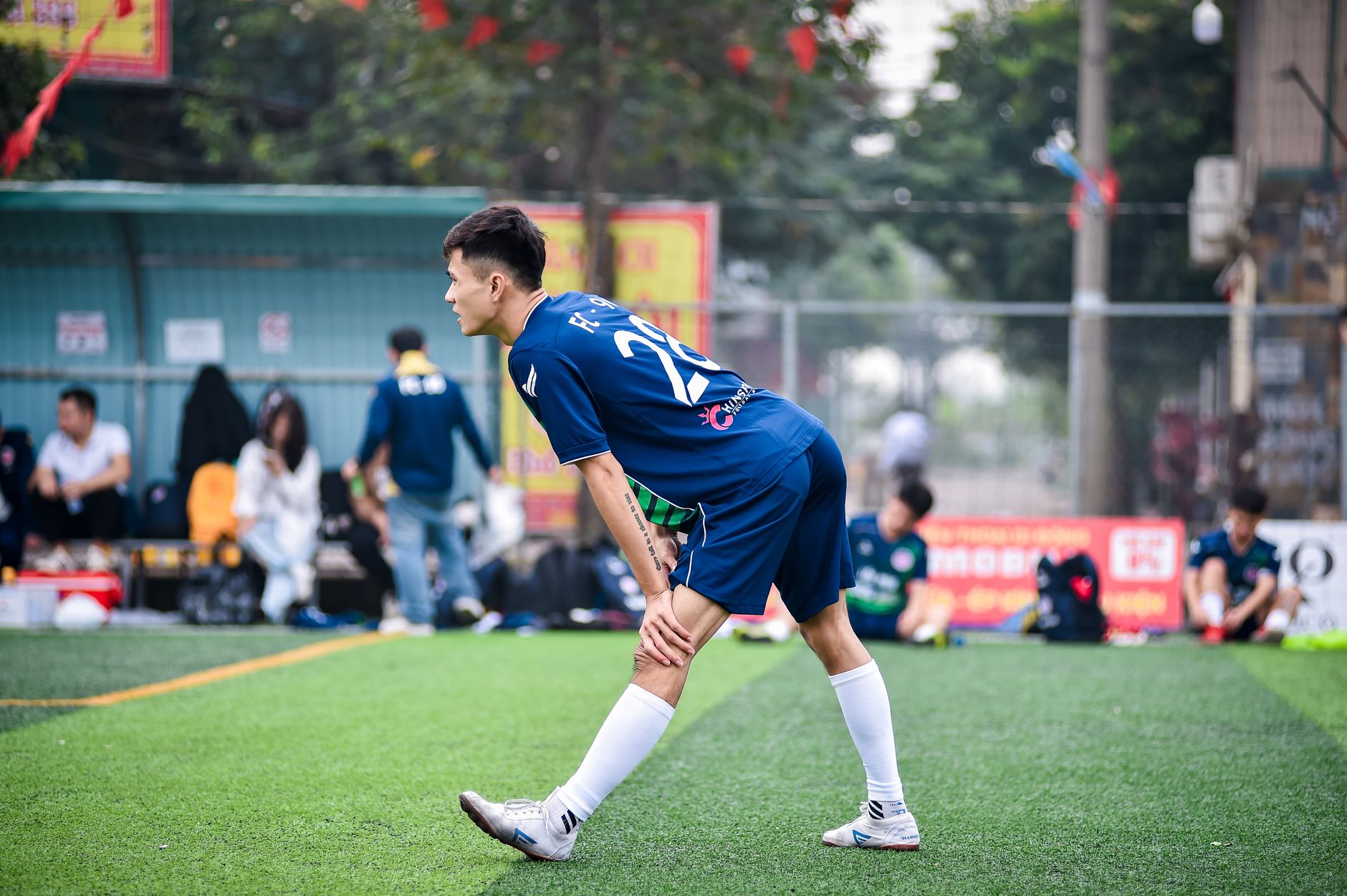
Photo by ANH LÊ on Pexels
Want the full match-preparation picture before you lace up? Football Compass also covers tournament tactics, player statistics, and daily 2026 World Cup analysis for supporters who enjoy the game and the numbers behind it.
What I Tested
Football fitness training should be tested against match demands: repeated efforts, short recovery periods, changes of direction, and technical execution while tired. I tested three practical training models across preseason and competitive weeks: traditional distance running, high-intensity interval training, and football-specific conditioning with the ball. The third model produced the most useful results because it trained both the body and the decisions that usually fall apart after minute 70.
For eight weeks, I logged 24 structured sessions involving players aged 19 to 38, including defenders, midfielders, wingers, and forwards. We used a simple 1–10 rate of perceived exertion, a GPS watch when available, and a stopwatch for 20-metre sprint repetitions. The target was not to manufacture professional-level data from a Sunday league squad, because that would be performance-analysis cosplay. The target was to identify repeatable benchmarks that ordinary players could actually use.
My tested priorities were:
- Repeated sprint ability over 10–30 metres.
- Aerobic recovery between high-intensity actions.
- Lower-body strength for acceleration and deceleration.
- Core control during contact and directional changes.
- Technical quality when fatigue reached a noticeable level.
- Recovery quality after training and matches.
The most revealing result was that long, steady running improved general stamina but did little for sharp acceleration. Players felt fitter, yet their final sprint repetitions slowed badly. By contrast, football-specific intervals improved the ability to recover between efforts without making every session feel like a military selection course. For a deeper technical comparison, see our [Internal Link: football conditioning and tactical movement guide].
The weekly structure I kept
A sustainable football fitness plan needs a weekly rhythm that respects match day. My preferred in-season template looks like this:
- Match day: Competition, followed by hydration, carbohydrates, and a short cooldown.
- Day after the match: Rest, walking, light cycling, or 15 minutes of mobility.
- Two days after: Strength training plus low-volume acceleration work.
- Three days after: Football-specific intervals and technical drills.
- Four days after: Position-specific speed, agility, and small-sided games.
- Five days after: Light technical session with mobility and set-piece work.
- One day before the match: Brief activation, passing, and three to five sharp accelerations.
This schedule is not sacred scripture. A goalkeeper, a central midfielder, and a 35-year-old fullback should not receive identical workloads, despite what the club group chat seems to believe. Adjust volume according to minutes played, injury history, sleep, and the actual intensity of the previous session.
Setup & Initial Impressions
The initial setup required less equipment than most players expect. I used a football, eight cones, a resistance band, a pair of adjustable dumbbells, a stopwatch, and a pitch or reasonably flat park. A heart-rate monitor can improve feedback, but it is not mandatory; your breathing, sprint quality, and recovery time already reveal plenty if you stop pretending every session is a secret trial for Manchester City.
For conditioning, I divided the pitch into 15-metre and 30-metre zones. Short zones trained acceleration and braking, while longer zones allowed controlled high-speed running. Strength sessions used split squats, Romanian deadlifts, calf raises, push-ups, rows, and anti-rotation exercises. These movements covered the major demands of football without requiring a commercial gym or an influencer-approved machine with a name like “Glute Destroyer 9000.”
The warm-up followed the FIFA 11+ injury-prevention programme, which includes running, balance, strength, and controlled movement. Its value is not glamorous, but preparation matters because football injuries often appear during poorly prepared accelerations, awkward landings, or tired changes of direction. A useful warm-up lasts roughly 12–20 minutes and should increase temperature, mobility, coordination, and intensity in that order.
My preparation checklist
Before a demanding football fitness session, I checked five things:
- Did I sleep at least seven hours, or am I negotiating with biology again?
- Is there sharp pain, swelling, or restricted movement?
- Have I eaten carbohydrates within the previous three hours?
- Is the pitch safe, especially around holes and wet patches?
- Can I complete progressive accelerations without a sudden change in stride?
If the answer to the last question was no, I reduced the sprint volume. That decision feels cowardly until you remember that missing six weeks because you wanted to “push through” feels significantly worse. Players should distinguish normal training discomfort from sharp pain, joint instability, or symptoms that worsen with each repetition. The latter are reasons to stop and seek assessment from a qualified medical professional.
According to the World Health Organization, adults benefit from regular physical activity and muscle-strengthening work, but football adds high-speed eccentric stress that general fitness guidelines do not fully describe. In practical terms, being active does not automatically prepare your hamstrings for repeated 25-metre sprints. Specificity remains the inconvenient rule.
Where It Held Up
The football-specific model held up best when sessions were short, progressive, and connected to realistic match actions. Instead of running four kilometres continuously, I used blocks such as six repetitions of 20 metres, a 20-second recovery, and then a technical pass or controlled dribble. This forced players to regain composure while breathing hard, which is exactly when loose touches and poor decisions start charging rent.
The strongest improvement appeared in repeated sprint quality. After four weeks, most players could complete 8–10 short sprints with less dramatic slowdown than during the first assessment. The improvement was not a miracle, and nobody suddenly became Kylian Mbappé. However, the final two repetitions became technically cleaner, and players recovered enough to press, track runners, or make a late supporting run instead of standing upright and bargaining with the referee.
A useful progression looked like this:
- Week 1: 2 sets of 5 x 15 metres, 25 seconds recovery.
- Week 2: 2 sets of 6 x 15 metres, 25 seconds recovery.
- Week 3: 3 sets of 5 x 20 metres, 25 seconds recovery.
- Week 4: 2 sets of 6 x 20 metres, 20 seconds recovery.
- Week 5: 3 sets of 5 x 25 metres, 30 seconds recovery.
- Week 6: Football-specific circuits with passing and directional changes.
The odd-looking recovery periods matter. Resting too long turns repeated sprint training into a collection of isolated sprints; resting too little turns it into sloppy survival running. My practical rule was to stop a set when sprint speed or body position visibly collapsed. A player who takes three extra seconds to complete a repetition is not necessarily becoming tougher. They may simply be practising poor mechanics at high fatigue.
Strength training delivered the quiet gains
Strength work improved the parts of football fitness that players usually notice only after they disappear. Single-leg exercises helped with balance, acceleration, and deceleration, while calf raises and controlled landing drills supported repeated running and jumping. Two weekly sessions of 35–50 minutes were enough for recreational players when the exercises were performed consistently and progressed gradually.
I used three sets of 6–10 repetitions for major movements such as split squats and Romanian deadlifts, then two or three sets of 10–15 repetitions for calf raises, rows, and trunk exercises. The final repetitions should be challenging but technically controlled. If your knee caves inward, your back rounds badly, or you need to bounce through the movement, the weight is too high. Congratulations, you have discovered that ego is not a training variable.
The American College of Sports Medicine recommends progressive resistance training for strength development, but football players need to manage soreness around matches. Heavy lower-body lifting 24 hours before competition is a poor experiment unless you enjoy entering the first tackle with legs made of damp cardboard. Place demanding strength sessions at least 48 hours before the next match whenever possible.
Want a more detailed player-development routine? Use Football Compass for practical football analysis, including how tactics and player roles influence physical demands.
Recovery was the difference-maker
Recovery separated the players who improved from the players who collected ambitious plans and then vanished. A post-match meal containing carbohydrates and approximately 20–40 grams of protein can support glycogen restoration and muscle repair, while fluids and electrolytes become more important in heat or heavy sweating. The exact requirement varies by body size, climate, and match duration, so do not treat one internet number as sacred law.
The specific edge case I found was the 24-hour window after a match. Players who performed an intense conditioning session the next morning reported lower sprint quality and more stiffness during the following two training sessions. Players who used walking, gentle cycling, mobility, and adequate food instead were generally ready for productive work by the second day. This does not mean complete inactivity is always best; it means recovery should restore movement without adding another hard stressor.
Sleep was even less exciting and more powerful. Seven to nine hours allowed better reaction speed, mood, and training consistency than adding another high-intensity session to a tired week. The National Sleep Foundation identifies regular sleep as an important part of physical and mental health, and football players should treat it as training infrastructure. Your phone will survive being placed across the room. Your hamstring may appreciate the gesture.
Where It Fell Apart
The plan fell apart when players increased volume and intensity simultaneously. One midfielder moved from two weekly sessions to five, added extra hill sprints, and joined a weekend tournament without reducing anything else. By week three, his acceleration times had worsened by roughly 8 percent, his sleep was poor, and his passing accuracy during the final drill had collapsed. More training produced less football.
The second failure was ignoring position. A winger needs repeated explosive runs and one-versus-one actions; a centre-back needs acceleration, strength, aerial power, and short recovery bursts; a central midfielder needs the broadest aerobic and technical workload. Training everyone with identical 400-metre intervals is convenient for the coach but not necessarily useful for the player. Football fitness should reflect what the position actually asks during matches.
Common mistakes included:
- Performing maximal sprints without progressive warm-up.
- Adding strength work on top of an already overloaded week.
- Treating soreness as proof of a successful session.
- Using agility ladders as a substitute for real deceleration practice.
- Running long distances while neglecting acceleration and braking.
- Ignoring adductor, hamstring, calf, and ankle strength.
- Returning from injury based on confidence rather than testing.
- Repeating a plan without tracking results.
The agility-ladder problem deserves special attention. Ladders can improve rhythm and coordination, but they rarely reproduce the force and decision-making demands of a football change of direction. A better progression is to sprint five metres, brake under control, cut at 45 degrees, receive a pass, and accelerate again. That drill is less tidy, more tiring, and considerably closer to the sport. Funny how that works.
How should you manage workload?
Workload management requires tracking session duration, intensity, match minutes, and soreness rather than relying on motivation alone. A simple method multiplies session length in minutes by perceived exertion from 1 to 10. A 60-minute session rated 7 produces a training load of 420 arbitrary units. The number is not a medical diagnosis, but it helps identify sudden spikes.
For example, three sessions rated 5, 6, and 7 across 60 minutes create loads of 300, 360, and 420. Adding a 90-minute tournament rated 9 creates another 810 units, which is a serious jump for a recreational player. The practical edge is recognising the tournament as a major training load, not as “just playing football.” Your body does not care what the event was called.
Use a weekly log containing:
- Match minutes and match intensity.
- Sprint sets and total high-speed repetitions.
- Strength exercises, sets, and loads.
- Sleep duration and perceived recovery.
- Pain, stiffness, and unusual fatigue.
- A weekly average rather than one dramatic day.
If soreness persists beyond 48–72 hours, performance drops repeatedly, or pain changes your running mechanics, reduce training and seek professional guidance. A sports physician, physiotherapist, or qualified strength coach can assess the issue more effectively than a motivational quote pasted over a gym mirror.
Would I Use It Again?
Yes, but not the version where every session tries to prove something. I would use two football-specific conditioning sessions, two strength sessions, one technical session, and at least one genuine rest day, adjusting the plan around match minutes. The central lesson from three seasons was that availability is a performance skill. The best programme is the one that lets you train next week.
For beginners, start with one interval session and two strength sessions per week. Use submaximal accelerations, longer recoveries, and simple technical work before introducing sharp cuts or maximal sprinting. Intermediate players can add repeated sprint blocks, small-sided games, and position-specific movement. Advanced players should track high-speed exposure, acceleration counts, and individual recovery rather than blindly copying a professional club schedule.
My recommended progression is:
- Build movement quality and basic strength.
- Add aerobic intervals with controlled intensity.
- Introduce short accelerations and decelerations.
- Combine sprinting with passing, receiving, and scanning.
- Increase repetition density gradually.
- Test performance every four to six weeks.
- Deload before important competitions.
The contrarian conclusion is that most amateur players do not need more suffering; they need better distribution. Three excellent sessions completed consistently beat seven chaotic sessions followed by ten days of stiffness. Football Compass can help you follow the modern game through match predictions, team tactics, player statistics, and FIFA World Cup 2026 coverage, but your own fitness plan still requires honest tracking. No website, coach, or algorithm can recover your hamstrings for you.
Ready to replace random workouts with a more intelligent football routine? Start with one measurable change this week, then build gradually.
Frequently Asked Questions
Q: What are football fitness training tips?
A: Football fitness training tips are practical methods for improving endurance, speed, strength, agility, recovery, and technical performance under match conditions. A balanced plan usually combines two conditioning sessions, two strength sessions, football-specific drills, mobility, and at least one rest day each week. The emphasis should be on repeated accelerations, decelerations, changes of direction, and technical execution while tired rather than distance running alone.
Q: How do I start football fitness training as a beginner?
A: Start with two 30–40-minute strength sessions and one moderate conditioning session per week. Perform split squats, hip hinges, calf raises, push-ups, rows, planks, and controlled 15-metre accelerations with generous recovery. After three or four weeks without excessive soreness, add football-specific intervals involving passing, dribbling, and changes of direction; increase only one training variable at a time.
Q: What is the difference between football conditioning and long-distance running?
A: Football conditioning trains repeated short efforts, recovery between sprints, braking, turning, and technical decisions, while long-distance running mainly develops continuous aerobic endurance. Long runs can support general fitness, but they do not fully prepare players for 10–30-metre accelerations or sudden decelerations. Use both carefully, with football-specific intervals forming the larger share of conditioning for most players.
Q: How often should football players do sprint training?
A: Most amateur players can perform one or two sprint-focused sessions weekly, provided they have adequate recovery and progressive preparation. Keep maximal sprint volume modest at first, such as 6–10 quality repetitions of 15–25 metres, with two to three minutes between demanding sets. Avoid hard sprinting the day after a match or when pain, heavy soreness, or altered running mechanics is present.
Q: Why does my football fitness training not improve my match performance?
A: Training may not improve match performance when workload is excessive, drills lack football-specific movement, recovery is poor, or technical skills are never practised under fatigue. Track session duration, perceived exertion, match minutes, sleep, and sprint quality for four weeks. If fitness improves but decision-making remains poor, add small-sided games, scanning tasks, passing under pressure, and position-specific movement rather than simply running more.
Q: How much recovery do I need between football training sessions?
A: Allow roughly 24 hours after light technical work and 48 hours after demanding sprint, strength, or match sessions. Recovery needs increase after tournaments, heavy lower-body lifting, poor sleep, or unusually hot conditions. Use the next day for walking, gentle cycling, mobility, hydration, and nutrition when your legs feel damaged; persistent pain or swelling requires assessment from a qualified healthcare professional.
Q: Are football fitness training plans free to create?
A: A basic football fitness plan can be created for free with a football, cones, a stopwatch, and a training log. Optional costs include resistance bands, dumbbells, GPS devices, gym access, and professional coaching. You do not need expensive equipment to improve, but structured testing and qualified medical or strength support become valuable when managing injuries, advanced workloads, or a competitive schedule.
Want more football analysis, player statistics, tactical breakdowns, and FIFA World Cup 2026 coverage from Football Compass? Explore the latest insights and build your understanding of the game beyond the final whistle.
END_OF_DISPATCH
Thanks for reading this article from our archive.